


Dr. Leonardo Oliveira
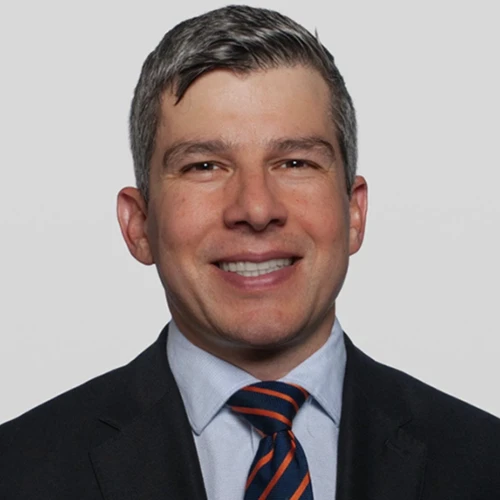
Topic: Advancements in Non‑Operative Sports Medicine & Ultrasound‑Guided Care
Guest Name: Dr. Leonardo Oliveira, MD, FACP, FACSM
Guest Credentials: Board‑certified in Internal Medicine and Sports Medicine (American Board of Internal Medicine, 2010; Sports Medicine fellowship 2011). Fellow of the American College of Sports Medicine and the American College of Physicians. Former faculty at University of Central Florida and University of Chicago before joining Cleveland Clinic Florida.
Discussion Details: Dr. Oliveira shares his insights on patient care, injury prevention, and treatment strategies within sports medicine. He touches on the evolving role of technology in diagnosis and therapy, and how his approach helps individuals stay active and healthy.
Benefits of Watching: Viewers will learn about innovative, non-surgical approaches to musculoskeletal care and gain a better understanding of how modern sports medicine is helping patients recover and maintain their performance.
Address of Guest’s Business: Cleveland Clinic Florida, Levitetz Department of Orthopaedic Surgery
2950 Cleveland Clinic Boulevard, Weston, FL 33331
Dr. Ryan Shipley: Hi, this is Dr. Ryan Shipley, director of B3 physical therapy. With us today is someone that I deeply respect and I know you’ll learn from, Dr. Olivera. He is a sports medicine physician in the Levit’s Department of Orthopedic Surgery at Cleveland Clinic, Florida with his primary location here in Weston. He also sees patients at the Coral Springs Family Health and Surgery Center. He is a fellow of the American College of Sports Medicine and the American College of Physicians and board certified in sports medicine. And he specializes in accurately diagnosing patients and assisting them in return to their sport of choice. Welcome Dr. Ala.
Dr. Leonardo Oliveira: Thank you. Thank you for having me.
Dr. Ryan Shipley: Thank you for being here. So just to get us started, um just tell me a little bit about what initially drew you to your specialty and kind of how you got into this career to begin with.
Dr. Leonardo Oliveira: So, as a sports center physician, um you’re involved with sports and people that are dealing with injuries. Um and my goal was always having done being fortunate of being participated in multiple sports when I was growing up. Soccer, tennis, volleyball, um body boarding up in Brazil. Um, I had my fair of injuries and it was very rewarding to see as I treated them the ability to go back and to return to my level of activity. And so I always thought that it would be great to, you know, help others that face the same difficulties that I had. Um, another instrumental moment as well was when I was in medical school, uh, and I was fortunate to do research with Dr. Antonio Nrea who is a exercise um, physiologist and a sports metaphysician and I really experienced exercise science um, in true hands, right? I was a volunteer for research studies, really saw science and you know V2 testing. I was um participated in a tube testing tests and that allowed me to see really the practical ways of you know of another part of exercise and sports medicine that I had not seen before. So when I saw that you know the combination of those I wanted to I knew I knew wanted to do that throughout my career.
Dr. Ryan Shipley: Awesome. That’s um you know a great story and I think it’s similar with a lot of us health care professionals. Some sort of personal experience as we’re you know growing up going through our collegiate years and such that really kind of establishes a foundation for what we’re going to work off of the rest of our career. Um is there a specific patient success story that comes to mind? um just one without disclosing any details but anything specifically that really stands out to you throughout your career that you were a part of.
Dr. Leonardo Oliveira: I think two came up to mind. Um one not necessarily sports medicine related but um just the patient related to patient care and how I think the essence of medicine is really caring for individuals listening making the the right diagnosis. Because I remember as a medical student I was treating this person and we made the right diagnosis, provided the right treatment and they were very grateful and said you know doc where where’s your office? says, “I want to see you.” And that was really rewarding to see, right? Um, and to feel that and to see the fruits of, you know, applying everything that you’ve studied, everything that you learn throughout medical school and your career applying that. So, uh, that was, you know, hey, I’m I I want to be this is what I want to do rest of my life, you know, be a physician. In the sports medicine realm, I the patients with tendonopathies. Um, I treat several runners and triathletes and there have been several that came with injuries and they had a half marathon and in a marathon in mind and we were able to get them back um to their race and it’s, you know, very rewarding them to, you know, then come say, “Hey, thank you for being there and helping me get to my goal.” So um so it’s it’s great,
Dr. Ryan Shipley: right? Absolutely. And I similarly I’ve had a you know kind of a similar foundation for my career. I started off you know just as a physical therapy technician. Um and although I was a very small part of a patient’s plan of care at that point in time um and throughout those years that was where I first got to see how rewarding healthcare and sports medicine in general really was. um when you see people just utterly defeated by a nagging injury or whatever it is that they’re dealing with and then you get to be a facilitator to get them back to doing the things that they love. It really um there’s no better feeling when you’re driving home from work at the end of the day. So, I couldn’t agree more. Um with that said, what conditions and cases do you most frequently work with?
Dr. Leonardo Oliveira: So as a sportsman physician um which a lot of times we’re referred as a non-operative sportsman physician um I think it’s important to clarify a little bit what I do. So I see a lot of acute and chronic sports injuries muscular muscoskeleletal related conditions not you know a lot of people say oh you only treat athletes. No, I see people who have knee pain and the knee pain happened when they started gardening or walking, right? It doesn’t they don’t need to be necessarily in a high school sports or a professional or amateur, right? Um, and my goal is to really diagnose them, treat them, and really the team approach with sports medicine as, you know, physical therapists, you know, definitely a great collaboration is essential part of that. So um and so as part of that as an aging population um we frequently have osteoarthritis right which is usually the wear and tear of the carage and so I do a lot of treatments with that with you know guiding patients on appropriate exercise injections and counseling them if they need advanced you know treatments at surgery and referring them accordingly. Um and I’d say the third part of my practice is tendonopathies. Tendonopathy is a just general term to say disease of the tendon which can be a partial tear or a full tear or that these tendons which are fibers are just wearing off over time and that’s when a comprehensive approach with the help of physical therapy the right exercises potentially particularly arthrologics or other tendon procedures under ultrasound can be very helpful um to get patients back and that can appear appear throughout the whole body, shoulders, hip, knees, ankles, and so definitely um in very common in the athletic population.
Dr. Ryan Shipley: Absolutely. And just to build off of that, um I know you said, you know, your patients aren’t necessarily all athletes. It doesn’t necessarily have to be the active individual. It could be your average adult that’s just, you know, having pain while gardening on the weekend or something along those lines. Um, but to build off of that, what types of patients typically thrive under your care? Is it individuals that are very proactive, um, or athletes specifically? Who do you find to typically excel the most under your care?
Dr. Leonardo Oliveira: I think the patients that thrive, I think the patients that really want to work with me and the healthcare team, right? Um, as a physician, my goal is to be the one that and that diagnoses them and guides them to okay, what are going to be the next steps, right? But, and I tell this a lot of my patients when we’re talking about the cold, right? Usually, you rest, you hydrate, you take vitamin C, healthy eating, and the body gets back to normal. When we’re talking about joints, tendons, muscle injuries, it doesn’t work that way. You got to put the effort. If we just lay in bed, the pain will go away, right? But the reality, we want a physical um restoration. We want to have an active lifestyle. We want to be able to do the things that we were doing before, being walking, you know, playing with the grandkids, traveling to Europe, right? And or going back to work our sport. So, um, if you’re willing to work with me and put in the time and the effort to do the exercises to see great therapists like yourself, um, and you know, and work on how lifestyle changes, um, you know, I’m happy to help you, um, get to your goal.
Dr. Ryan Shipley: Awesome. I love that. And I’m gonna kind of just ask a broad question here because it’s something that I get very, very frequently as a physical therapist. Um, oftentimes I’ll have a patient come in, they might have imaging of some sort, whether that’s MRI, radiographs, whatever it is, and maybe it shows severe arthritis, and then I can’t tell you the number of times I have an individual just look at me with this report and say, is there anything that you can do about that? So, would you care to elaborate a little bit on exactly what can be done for those severe cases of arthritis?
Dr. Leonardo Oliveira: Yeah. That’s what I think for the severe case of arthritis. Um, I like to reference a study that was recently done in Australia that they really have been advocating to use less imaging. Why is that less imaging? I mean by doing less X-rays because a lot of times we have sometimes in order to promote more information and education get more imaging and to explain to the patient you know what you have in a severity. But what happens a lot of times we and us included you look at the x-rays oh you have advanced disease right and they say oh that means I can’t cycle I can’t walk I can’t travel which is not that the goal right so the goal I think is you know when we’re talking about arthritis is I first first think of function right and decreasing pain don’t worry too much about the imaging right um and let’s try to address the things that are important for the function which is the strengthening, the mobility, the range of motion um and then work in you know if there’s issues with weight let’s address them healthy eating and address that what we call the inflammatory environment right and both the environment the wear and tear and that’s the muscle function appropriate footwear plays a big role right um when that I think is optimized that’s when we can then offer advanced injections um of you know platelet rich plasma meeny mobile stem cells that potentially will further improve the function of the cartilage and decreasing in improving the function of the cartilage decreasing pain and allowing them to have a better function.
Dr. Ryan Shipley: Absolutely couldn’t have said it better myself. So, to build off of that, you know, we probably have a lot of viewers right now who may be listening to this and thinking, you know, this sounds like something that could potentially help me moving forward. Um, if somebody was watching this video and they were hesitant about, you know, reaching out or moving forward, what would you want them to know?
Dr. Leonardo Oliveira: What I’d like them to know, I think, is first seek help. If you’re having pain, if this is affecting your day-to-day activities, if you have an activity that you want to go back to, there are a lot of different treatments nowadays, right? Um, and that doesn’t mean that you need to have a major surgery. Um, that and surgery has evolved over the years, right? Um, with less complications and a higher success rate. I think the key thing is find get the right diagnosis, right? So um my goal first is to get the right diagnosis and when with that then establishing you know what it is that we have to do. Um unfortunately in medicine there are some things that are easier to treat than others um according to the severity. Sometimes the treatments don’t respond as well but I think don’t don’t let that stop you. I think get the right diagnosis, surround yourself with people that are going to help you and think of small steps, right? Um, you know, when we have a big challenge, if we just try, hey, I want to run a marathon. If we’re just starting thinking about the marathon tomorrow, right? Um, you will get overwhelmed. You think of, okay, the goal for the week is to do my three runs, right? And do that well, right? And I think breaking down a big goal into smaller steps u I think that’s the the way that we can the the path to success in everything that we do in life.
Dr. Ryan Shipley: Absolutely. So if someone was serious and not curious about taking action with the you know discomfort or pain or whatever it is that they may be dealing with what would be the best way for them to get in touch with your office to book a visit?
Dr. Leonardo Oliveira: Yeah. So, um, at our Cleveland Clinic website, you can just there’s a scheduling line that you can go ahead and call. Um, I know that sometimes, you know, every major healthcare center, their phones are very busy. Um, since we are scheduling for multiple departments. Um to make it a convenience as well, you can also do a web request that you put your information um put your phone number and somebody will um reach out to you um to schedule that. Uh and then indicate you know um the urgency and the need if you have um a race coming up if there is a big travel um and we try to then as best as possible expedite that. so that we can help you reach your goals.
Dr. Ryan Shipley: Excellent. And for a first-time patient, um what would they expect during their first visit? What does that look like here at your location?
Dr. Leonardo Oliveira: So, first visit um includes, you know, us talking and examining um the muscoskeleletal system in order to see, for example, I’m just going to use the knee pain, right? I always examine the knee and the hip because one can be playing a role in the other, right? And examining the strength, right? Because we all a lot of times think about the strength around the knees, but it’s really the strength of the whole body, right? Um, and so muscle skeletal strength testing, checking if there’s any lack of sensation in the lower extremities, mobility. Um, that’s one of the things I try to do in my office visit. Um having a conversation, understanding, you know, what are your goals and what have you done so far and what has been the struggle and if there are underlying coorbidities, high blood pressure, diabetes, um cancer that we need to be aware of as we’re you know recommending the treatment options. Um we use imaging as a complimentary tool. Um and generally we get X-rays because those can help us look at the joint spaces. Um see if there is any bone lesion. Um rarely there can be um knee pain is a sign of bone tumor but that’s why we usually um and we have that in the office for the patient’s convenience.
Dr. Ryan Shipley: Right. And I can’t express enough the importance of that you know comprehensive evaluation. Um, so in his example, an area of concern being the knee, looking not only at the knee, but also at the hip, perhaps the foot and ankle as well. Um, because oftentimes what we see as physical therapists, and I’m sure you as well as a sports medicine physician, we have underlying issues either above or below the area of concern that are typically contributing to the problem. Um, so the comprehensive approach and evaluation is definitely an excellent, you know, first step towards your goals. Um, do you have any final thoughts or suggestions that you would want to share with, you know, someone who may be watching this and they’re struggling with knee pain, foot pain, hip pain, whatever it is. Um, just any broad, you know, thoughts or suggestions for them and how they can move forward.
Dr. Leonardo Oliveira: So, my recommendation is don’t let that stop you. Seek help. Um a lot of times we try on our own. Yes, there is a lot of information on YouTube. There are a lot of exercise. I think information that we have nowadays is substantially more than when I had years ago, right? But I think you got to equip yourself with the right people, the right team um to help you get your goals. And I see a lot of times people want to try to do the um more convenient way online or sometimes it’s cheaper. Invest in your health. If you invest in your health, if you’re dedicating the time and money, um you will reap those benefits. And our goal here is to treat your injury, get you back. And I always tell that to my patients, you know, you need to do, I’m reporting American College of Sports Medicine, at least three days of aerobic exercise, getting 150 minutes of um moderate intensity aerobic exercise, you know, at least two to three days of strength, two days of strength training. Um that is for somebody who’s healthy and has no muscular skeletal, no joint issues, muscle issues. If you have had an injury, that even becomes more important, right? So I think seek help. Don’t don’t try to figure it out on your own. If it’s not getting better, you’re already this is 10 days into you have a race that you want to go to. You have a travel, you’re going to be going with your grandkids somewhere. Um, you know, invest your time and now make the commitment and that will reap benefits not for this short-term goal but throughout your whole life.
Dr. Ryan Shipley: Absolutely. Very well said. Well, Dr. Vera, thank you so much for your time. I highly appreciate it. Um, we’ll definitely uh get you his contact information. We’ll actually link it here within the video so that you have that if you would like to reach out to him and his team uh moving forward. And thank you so much for watching.